Category: News

Since 1987, FCX units have been installed on every continent and in more than 75 countries. Below you will find our most recent solutions, helping meet our clients’ requirements worldwide.

NORTH AMERICA
23 Gates at DFW’s Lower B Gates
NAS North Island / Naval Base Coronado multi-building 400 Hz unit replacement project
Luke Air Force Base Hangar 3: 270 VDC units, PCA units, and pits
Anechoic Chamber at NAS Patuxent River 270 VDC unit for the F-35
Luke Air Force Base Hangar 2
Holloman Air Force Base (12) 45 KVA 400 Hz units
Marine Corps Air Station Miramar (2) 120 KVA 400 Hz units
U.S. Navy shipboard 270 VDC units
5-year contract with Naval Surface Warfare for 180 KVA 400 Hz units

AFRICA
400 Hz and 60 Hz systems in Djibouti, Africa for the primary operations base for U.S. / Africa Command in the Horn of Africa

AUSTRALIA
Royal New Zealand Air Force mobile 400 Hz unit
270 VDC project in Australia for the RAAF (Royal Australian Air Force)

EUROPE
270 VDC power for the UK MoD F-35 Logistics Operations Centre

FCX has recently visited the following countries to expand our distributor / relations reach:

  • Singapore
  • Vietnam
  • Australia
  • Japan
  • Israeli Ministry of Defense

Headquartered in Morgantown, W.Va., FCX Systems is the world’s leading manufacturer of solid-state frequency converters, ground power support (GSE) and custom power conversion solutions for military, commercial, shore power and industrial applications around the world.

fcx-salutes-vet_881_5f69ccdaa1f6b30703facf5f32e453d9705b6b1c

FCX Systems was acknowledged with a “Gold” Composite Rating from Boeing in its most recent Supplier Performance Report.

The “Gold” Composite Rating is Boeing’s highest distinction and can only be achieved by earning “Gold” status in both “Quality” and “Delivery” performance metrics.

To earn this distinction, FCX Systems performed at 100% quality and on-time delivery from June 1, 2015 to June 30, 2016.

On August 2, 2016, FCX Systems hosted a luncheon for Jeff Key, recognizing his 25th anniversary with the company. Jeff received a certificate, anniversary gift and a reserved parking space with sign.

Jeff started his employment with FCX on July 22, 1991 and has continued to contribute to FCX’s success.

We extend our best wishes to Jeff and thank him for his loyalty, diligence and dedication to FCX Systems!

jeff_key

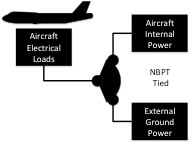
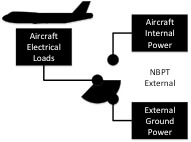
Several specifications and brochures concerning 400 HZ Ground Power Units (GPU) mention protection for No Break Power Transfer (NBPT). Few explain why it is included or what this requirement actually means.

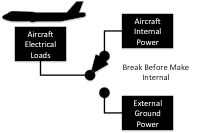
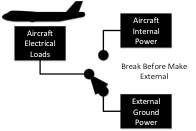
Originally when power was switched from internal aircraft sources to an external source, the internal source connection was broken, before the external connection was made. This was a “break before make” transfer. It meant that there was a time without power during the transfer. This is shown in Figures 1, 2 & 3.

AEL1AEL2AEL3

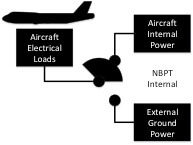
In Figures 4, 5 & 6 the internal and external sources are tied together before the aircraft internal side breaks. This is a “make before break” transfer. Power to the aircraft electrical loads is never interrupted. This is referred to as a No Break Power Transfer (NBPT).

AEL4AEL5AEL6

MORGANTOWN, W.Va., May 16, 2016 – U.S. Secretary of Commerce Penny Pritzker today presented FCX Systems, Inc. with the President’s “E” Star Award for Exports at a ceremony in Washington, DC. The President’s “E” Award is the highest recognition any U.S. entity can receive for making a significant contribution to the expansion of U.S. exports.

“FCX Systems has demonstrated a sustained commitment to export expansion. The “E” Awards Committee was very impressed with FCX Systems’ more than 300 percent growth in export sales from 2012-2015. The company’s adaptation of its product line for export markets was also particularly notable. FCX Systems’ achievements have undoubtedly contributed to national export expansion efforts that support the U.S. economy and create American jobs,” said Secretary Pritzker in her congratulatory letter to the Morgantown firm announcing its selection as an award recipient.

FCX Systems is a manufacturing firm specializing in solid-state frequency converters and ground power support for military, industrial, commercial and shore power around the world. Since 1987, FCX units have been installed on every continent and in more than 75 countries. The firm employs 70 people at its headquarters in the Chaplin Hill Business Park.

“Exporting continues to be a contributor to our sales growth, and we are honored to receive the “E” Star Award,” said Craig Walker, FCX Systems president and CEO. “During the past 20 years, FCX has grown our exports exponentially and we look forward to the next 20 years and new opportunities to further expand our business internationally through our network of global partners.”

FCX Systems was awarded the “E” Award for Exports in 2000, a requirement to receive the “E” Star Award for Exports, and is the first company in West Virginia to be recognized with both awards.

“FCX Systems is an example for other small business in West Virginia, proving that being proactive when doing international business, pays off,” said Diego Gattesco, director of the U.S. Department of Commerce Export Assistance Center in Wheeling, W.Va. “Traveling, meeting and developing a relationship with your partners and buyers overseas is crucial to grow your export business,” he added. “Congratulations to FCX Systems for this well-deserved, prestigious award.”

In 1961, President Kennedy signed an executive order reviving the World War II “E” symbol of excellence to honor and provide recognition to America’s exporters. Today, Secretary Pritzker honored 123 U.S. companies with the President’s “E” award for their outstanding work to reduce barriers to foreign markets and to open the door to more trade around the world.

In 2015, U.S. exports totaled $2.23 trillion, accounting for nearly 13 percent of U.S. GDP. Nationally, exports contributed to the U.S. economy, supporting an estimated 11.5 million jobs.

U.S. companies are nominated for the “E” awards through the Department of Commerce’s U.S. Commercial Service office network, located within the Department’s International Trade Administration, with offices in 108 U.S. cities and more than 70 countries. Record years of successive export growth and an applicant’s demonstration of an innovative international marketing plan that led to the increase in exports is a significant factor in selecting the winners.

For more information about FCX Systems, visit www.fcxinc.com.


In an earlier blog I explained why aircraft and most military equipment was powered by 400 Hz (cycle) power. This included the statement that this standard was worldwide. Wherever you fly there will be a 400 Hz power source available with a standard plug that fits your aircraft. Well almost. There are a few exceptions. Smaller & older aircraft use a 28 VDC system and smaller airports may only have a 28 VDC power source. So actually, we have two standards although the 400 Hz system is the workhorse of commercial & military aviation where high power is required.

During the last 16 years there has been a growing usage of a third system using 270 VDC. The 270 VDC system for aviation was first defined in MIL-STD-704B 17 Nov. 1975. Battery systems in this voltage area had been utilized in submarines since 1900.

The old reason for the 270 VDC system was increased power density and capacity.
The new interest is due to stealth concerns and design changes in modern fighter aircraft

Alternating current systems such as 400 Hz are not as stealthy as Direct Current (DC).

Although the 270 VDC military specification introduced in 1975 and last updated in 2004 (MIL-STD-704F) is still in effect, it does not contain all the requirements needed for the modern 270 VDC fighter aircraft.

The new generation aircraft, specifically the F/A-22 Raptor and the JSF (Joint Strike Fighter) F-35 Lightning, require a system that is more precise, has faster response, and is tailored to the specific requirements of the aircraft manufacturer. Simply put, although this is a 270 VDC system, the requirements define a power supply that far exceeds the old 2004 MIL-STD-704F performance. This required the creation of a 270 VDC system specific to the new aircraft.

The previous generation of fighter aircraft used a dual hydraulic system to move the flight control surfaces. This presented a large vulnerability should the aircraft suffer damage and fluid loss.

Newer aircraft now utilize multiple electrically driven hydraulic actuators at each control surface. This now requires the electrical system to respond to rapid load changes while maintaining a constant voltage.

Radar systems require more pulse power while the voltage stays constant.

The aircraft 270 VDC power system is ideally suited to meet all these demands. The performance of the on board power is matched by the performance of the external power supply built by FCX Systems. This allows full maintenance including flight control response tests to be performed inside the hangar.

The FCX external power supplies are tested for voltage stability and recovery at various load configurations, transitions and pulse loading. The power supply performance is recorded and examined for voltage transient response during the loading criteria to insure that voltage is maintained within the limits that are safe for the aircraft.

FCX supplied the first modern 270 VDC power supply used on the first F/A-22 Raptor in 2000 and continues to support 270 VDC aircraft today both in the field and on the JSF assembly lines in the US, Italy and Japan.

February 10, 2016

As I was catching up on email this morning, I was realized something odd. Several of my client emails contained questions of which had nothing to do with equipment that had been purchased. They needed helped and I could provide the answers.

There was no warranty verification, no service subscription requirement and no hourly charge, just some correspondence between friends. In one case, a new friendship was being developed, as someone had retired and I was corresponding with the replacement.

I like to think that customers are lifelong commitments. Something more enduring than a financial transaction for goods and services rendered. At some level there exists a bond between the user of the equipment and the customer support contact. I’m not describing a pen pal but a bonding of trust where people work together to help each other do a better job. The participants become a team which goes deeper than maintaining a piece of equipment. The exchange will begin with installation questions, parts, drawings, miniature training sessions and progress to a respect for each other’s skills and knowledge.

This bond, which exists at the service level, is very influential to help with the follow-up on sales and preventing the competition from getting to the existing customer. In return, competition may react in a variety of ways, including lowering their price. This defense tactic can create a handful of issues.

  • Customers may experience decreased quality and increased maintenance and downtime.
  • Employees experience decreased morale, as they are responsible for maintaining equipment without parts or instructions.
  • Operators become rougher on equipment because it does not work properly.

The value of service cannot be measured although it is a major factor in the success of a company. How many times have you read the review of a product and learned that the company service was a nightmare or nonexistent? Did that influence your desire to make a purchase?

At FCX, we believe service is a cornerstone of our business. With worldwide support 24/7/365, FCX provides consultation, trouble-shooting and frequency converter and ground power replacement parts directly to you. Through comprehensive service – from initial contact through production and ongoing support – our customers become long-term partners.


Allen Wright has been involved in power electronics since 1972 and in 400 Hz aviation power since 1978. He became one of the founders of FCX Systems, Inc. in 1987

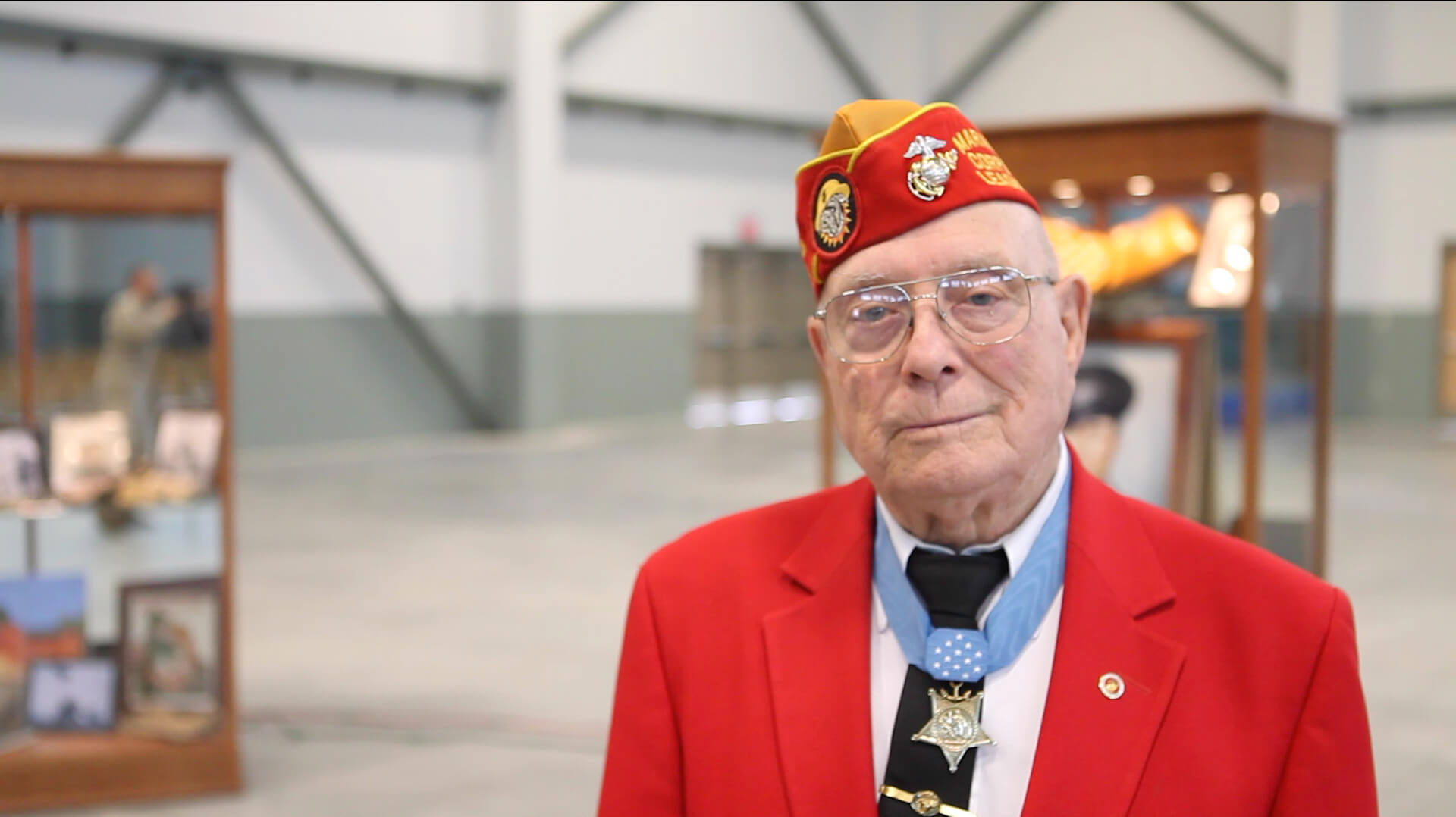
On January 14th, 2016, in a ceremony in Charleston, West Virginia, Ray Mabus, Secretary of the Navy, announced that the newest expeditionary sea base (ESB) ship T-ESB 4 would be named the USNS Hershel “Woody” Williams.

Born in Fairmont, West Virginia, Mr. Williams joined the U.S. Marine Corps following the attack on Pearl Harbor. Initially, he was turned away from the U.S. military because he was too short. However, he kept pushing and enlisted with the Marine Corps Reserve in Charleston, West Virginia. In the months that followed, he found himself as a member of the 21st Marines, 3d Marine Division in action against the Japanese forces on Iwo Jima.

On February 23rd, 1945, Corporal Williams was quick to volunteer his services when U.S. tanks were maneuvering to open a lane for the infantry through the network of reinforced concrete pillboxes, buried mines and black volcanic sands. He daringly went forward alone to attempt the reduction of devastating machine gun fire from the unyielding positions. Covered only by four riflemen, he fought desperately for four hours under terrific enemy small-arms fire and repeatedly returned to his own lines to prepare demolition charges and obtain serviced flamethrowers, struggling back, frequently to the rear of hostile emplacements, to wipe out one position after another. On one occasion, he daringly mounted a pillbox to insert the nozzle of his flamethrower through the air vent, killing the occupants and silencing the gun. On another, he grimly charged enemy riflemen who attempted to stop him with bayonets and destroyed them with a burst of flame from his weapon. His unyielding determination and extraordinary heroism in the face of ruthless enemy resistance were directly instrumental in neutralizing one of the most fanatically defended Japanese strong points encountered by is regiment and aided vitally in enabling his company to reach its objective. Corporal Williams’ aggressive fighting spirit and valiant devotion throughout this fiercely contested action sustained and enhanced the highest traditions of the U.S. Naval Service.

On October 5th, 1945, President Harry S. Truman presented the Medal of Honor to Corporal Williams. The Medal of Honor is the highest award for valor in action against an enemy force which can be bestowed upon an individual serving in the Armed Services of the United States.

Today, Mr. Williams is a very vibrant and robust 92 year-old living in Ona, West Virginia. He continues to stay actively involved and his current project is to lead the charge to have a memorial to Gold Star Families – those families who have lost sons and daughters in service to their country – in every state.

FCX Systems congratulates and honors West Virginia’s own Hershel “Woody’ Williams for being the hero he was on Iwo Jima in 1945 and for the continuing to give of himself to others every day of the week.


THANK YOU MR. HERSHEL “WOODY” WILLIAMS – you have made every West Virginian and American proud.

Every once in a while, something goes wrong. Many things, like a flat tire, are easy to diagnose. “Sounded like BANG Whomp, Whomp, Whomp. Looks like a flat tire, must be a flat tire. “

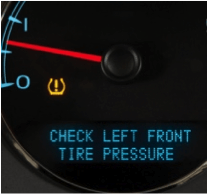
Other things are more complex. Let’s stick with tires for the moment. Newer vehicles come with pressure sensors in the tires. At some point, a low-pressure level triggers an alarm. A light on our console indicates the alarm. Fancier cars even tell you which wheel. The problem is, when you rotate the tires it now shows the wrong tire unless it was re-calibrated. Another problem is these sensors are battery powered inside each wheel (including the spare). When the battery fails, an alarm comes on even if the air pressure is good. Fortunately, although the indicator may be accurately indicating a flat tire, it will not prevent you from driving on it until the tire is un-repairable and the rim also has to be replaced. “No honey, I didn’t have a flat last night. But the car was driving funny and making a noise like “Whomp, Whomp, Whomp.”

This all goes to show that diagnostics can be correct some of the time, incorrect some of the time and inconclusive some of the time. Yes, they are a valuable tool and extremely helpful, but should not always be blindly followed. The user needs to know the equipment and possess common sense at all times. Today we expect an internal diagnostic to trigger an alarm or text display, and then, not only explain what is wrong but also guide us through the repair or correction.

For example: “Open Door C, lift the Blue Lever marked C3, turn the Green Knob YY two turns to the left and remove the paper jam.”

What if the jam sensor is the broken part? Will the report get out by the end of business today?

I often see specifications defining the diagnostics and fault codes, which are written by someone whose job is writing.

They have never fixed or operated a machine in their life. The specification request may require a log of the previous 100 faults. I would hope there is a thought that just jumped out and said, “What do I care if the cause was for a fault 100 events back?” What is the last fault? Maybe the last five but be realistic when you ask for a feature. Another good one was a request for an indicator lamp to indicate loss of power! Yes, it can be done, but how about the obvious- if the lights are off, there is no power.

What happened to the folks who knew the equipment? There were craftsmen who could feel or hear if something was a little bit off and needed an adjustment before damage occurred. Those craftsmen are here with us in West Virginia.

We design fault codes to help the average user find a problem if one exists, but we also back up the automated diagnostic with real technicians and engineers in real time. Give us a call, we would love to talk and introduce you to equipment made as it should be made.

111